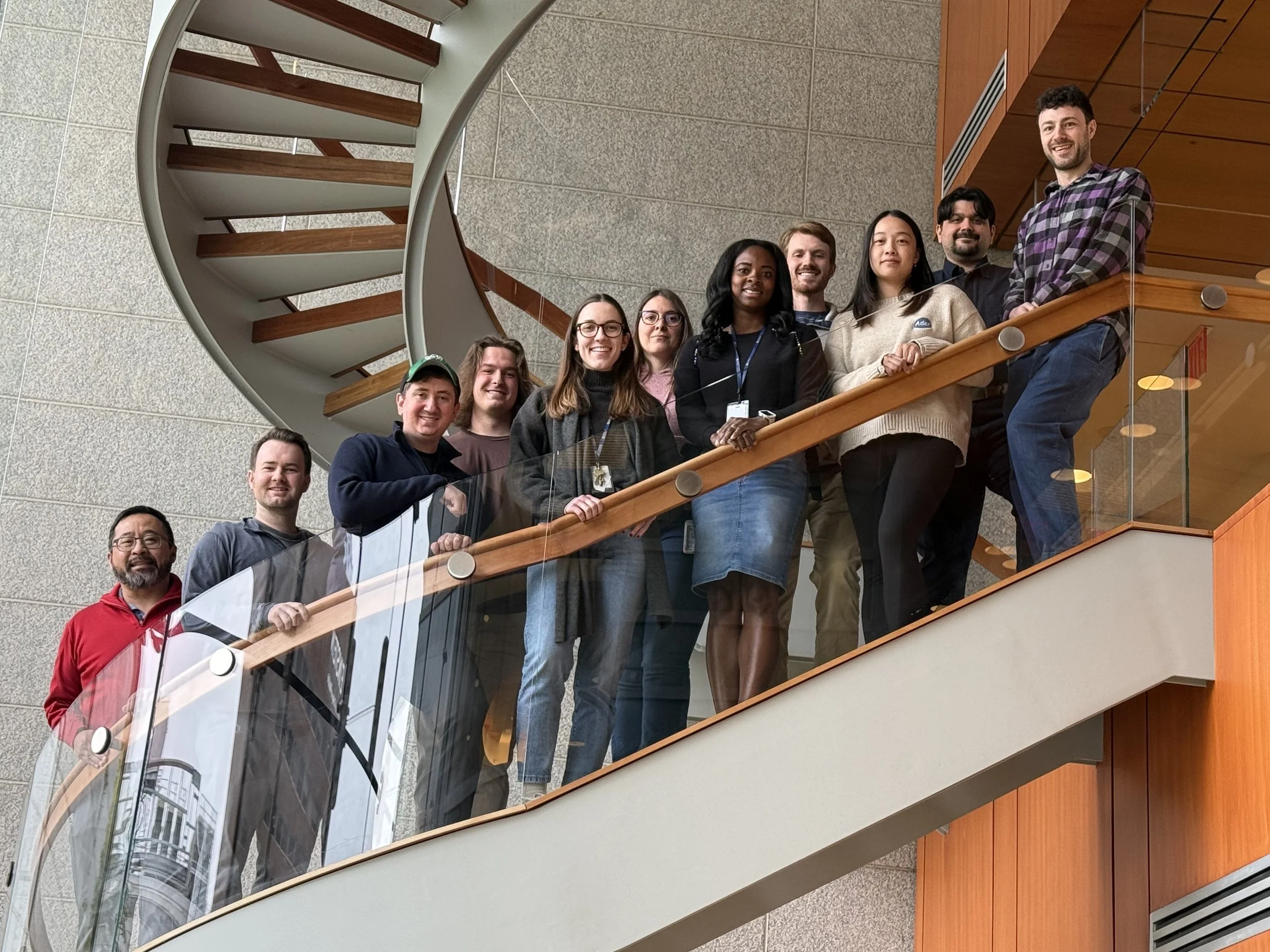
About the lab
Area of Research: Protein chemistry, antibody engineering, antibody isolation, vaccine design, immunotherapy, virology
Our group is broadly interested in the application of peptide, protein, and antibody engineering methods for the discovery and development of novel immunotherapies and immunogens. Projects are highly interdisciplinary and involve aspects such as phage display, structure-based protein design, bispecific antibody engineering, structural biology, virology, and cancer biology.
-
The use of monoclonal antibodies (mAbs) as therapeutics (immunotherapy) has been highly successful for a number of diseases. MAbs offer an advantage of being highly specific, with little adverse effects. Furthermore, mAbs can engage in Fc-related functions that may serve to promote clearance of infections. We have been using state-of-the-art protein engineering methods to identify, characterize, and evaluate novel immunotherapies against Ebola virus, Chikungunya virus, and Crimean-Congo Hemorrhagic Fever virus. We focus on developing new therapeutics by protein engineering that may have features that are not possible with conventional (natural) antibodies.
-
Dengue virus is a mosquito-transmitted flavivirus that causes hundreds of millions of human infections world-wide each year. There are four serotypes of Dengue (DENV1-4) that co-circulate in hyperendemic regions. Dengue virus vaccine design has been complicated by the emergence of Zika virus (ZIKV), another flavivirus. We have been using structure-guided protein engineering to develop novel immunogens that elicit DENV and ZIKV protective antibody responses. Our strategy focuses on common susceptible epitopes that may be structurally engineered.
-
Phage display is a combinatorial technique that permits the selection of binding clones from highly complex protein libraries. We have used phage display to dissect critical determinants underlying specific protein-protein and protein-antibody interactions. Ultimately, this information can be utilized to design new proteins or antibodies with enhanced function; and contributes generally to our knowledge of protein recognition. Projects focus on applications in T-cell immunology, chronic lymphocytic leukemia, Alzheimer’s disease, and viral immunotherapy.